
TANIQ at 20: The Story Behind the Journey
The Question That Started It All
What if rubber products manufacturing could be automated?
Twenty years ago, it was a question that sounded ambitious. Some thought it wasn’t possible. Others questioned whether it was even necessary. But we believed there had to be another way. What if robots could make rubber manufacturing more flexible? What if they could open up possibilities that traditional manufacturing couldn’t? And what if automation could change not only how products were made, but what could be made in the first place?
At the time, there was no clear path from that idea to a working technology. There was uncertainty, experimentation, and plenty of back and forth. We were exploring what was possible, and gradually finding our way forward. But we believed the idea had potential, and that belief marked the beginning of our robotic winding technology, and the start of a journey that would take TANIQ much further than we could have imagined.
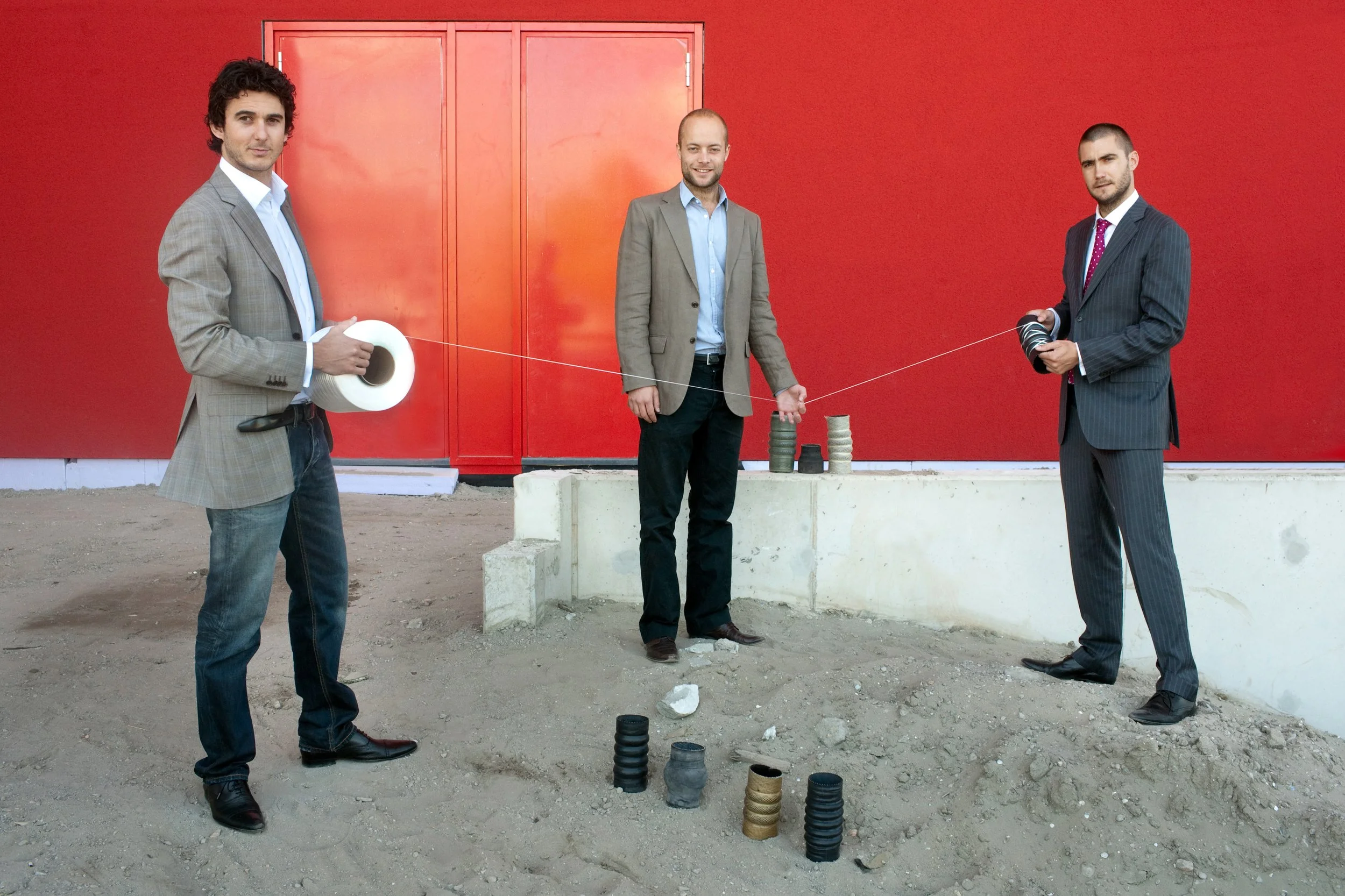
TANIQ’s original three founders at the beginning of the company’s journey
Turning An Idea Into Reality
Having an ambitious idea was one thing. Making it work was another.
To turn our vision into reality, we took our first steps into robotic filament winding, drawing on the challenges manufacturers faced and the needs we saw in the industry. Those steps led TANIQ to become one of the first companies in the world to develop a robotic filament winding system, following MFTech in France. But building the robot was only the beginning. After a year of working with existing software, we realized that if our robotic winding was going to reach its full potential, it needed something more — software built specifically for it. So we started building our own. We were no longer simply adapting existing technology to a new way of manufacturing. We were beginning to build the tools that would allow us to shape that way of manufacturing ourselves.
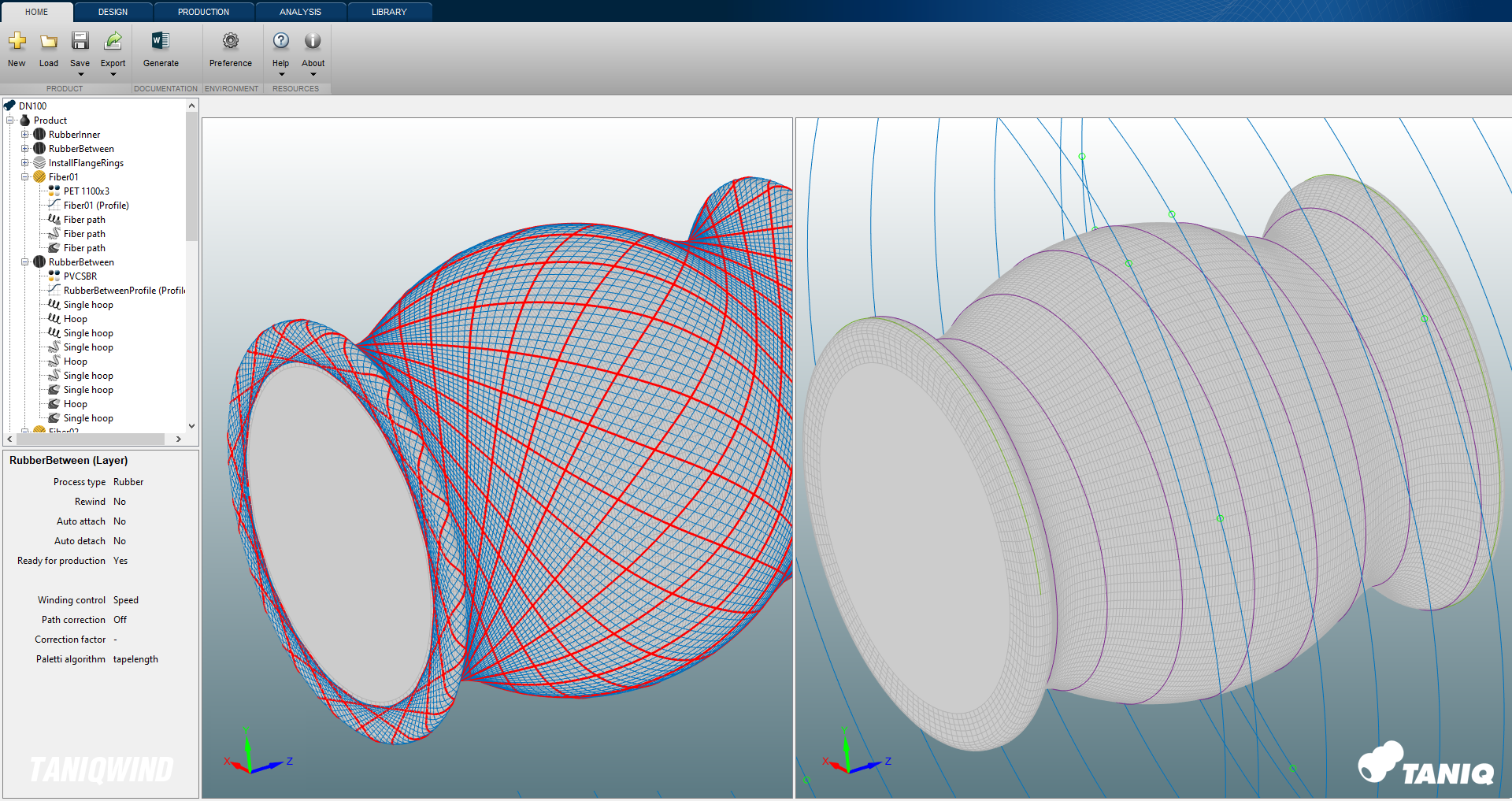
TANIQ’s in-house developed software platform for rubber expansion joints
The First Breakthrough
We believed in what we were building. But turning that belief into something real — and proving that it could work - was the real challenge. Automation was still met with doubt in the rubber industry. Many were uncertain whether it could truly work, or whether a robot could handle the complexity of rubber manufacturing, or whether it would be worth the investment instead of a large team of manual operators. We knew from the beginning that bringing this technology to the industry wouldn’t be easy. But we needed someone willing to believe in it and take that first leap with us. And someone did. We sold our first robotic winding system to a US Client in the Defense and Rescue industry. This was a major milestone for TANIQ, because our vision was no longer just an idea, but a working technology.
As we worked more closely with our clients, their needs pushed us to think beyond a single robotic winding system. We began developing complete solutions for manufacturing reinforced rubber products — combining rubber, cord reinforcement and pressure tape layers in one automated process.
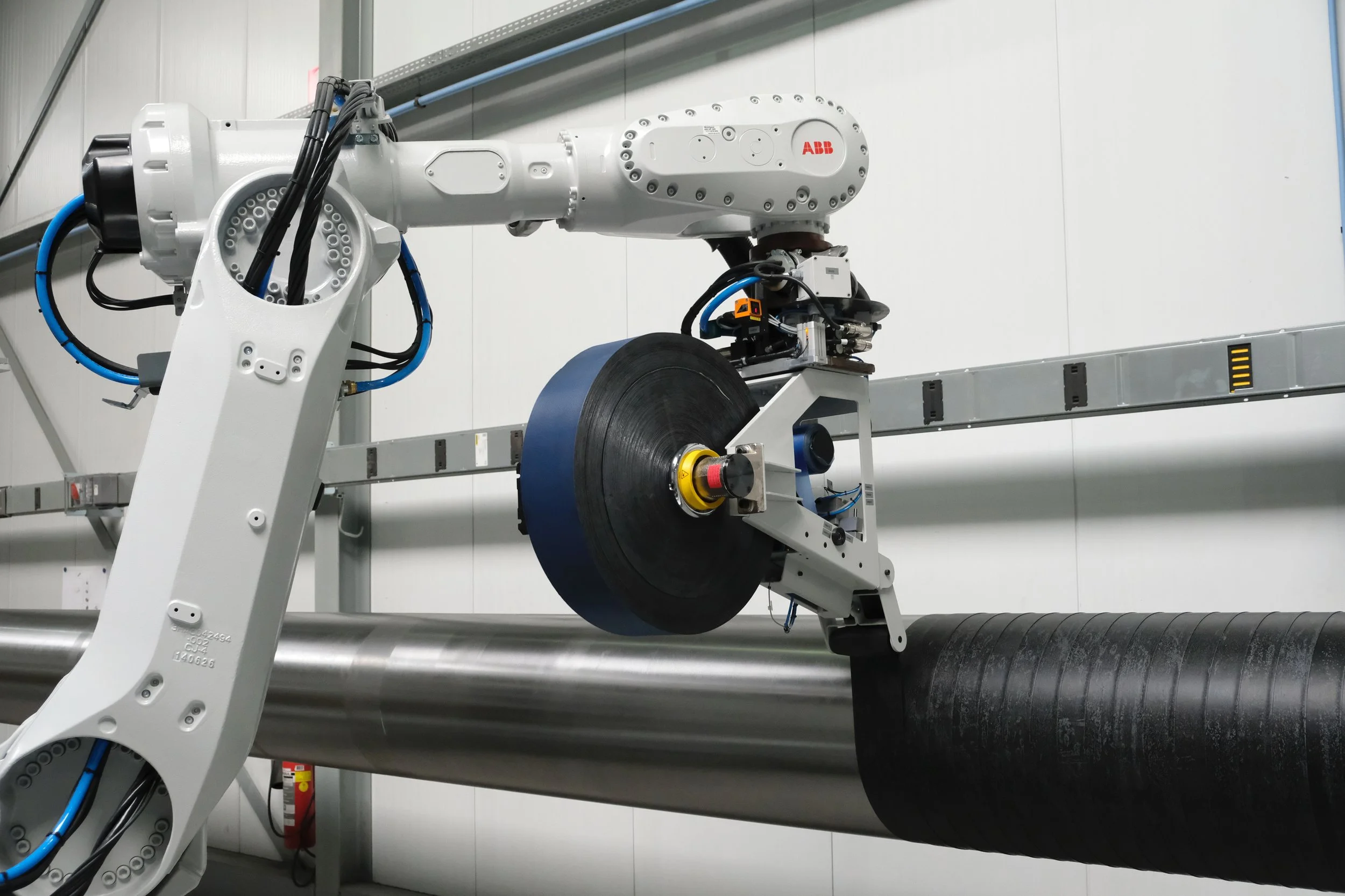
TANIQ’s Scorpo Taurus Robotics – automated production for large size products
A New Journey Beyond Rubber
After pushing automation further than we had imagined in the rubber industry, we began looking for the next challenge. In response to the growing demand for advanced filament winding software for hydrogen storage pressure vessels, TANIQ’s journey in the composites industry began.
As we explored the possibilities of filament winding, we wanted to understand what the industry actually needed from its software. We spoke with people working with filament winding, listened to their challenges, and learned from their experience on the production floor. These insights became an important part of the development of TaniqWind Pro. The result was an advanced software built around real winding knowledge and industry experience, helping clients design and manufacture composite parts more effectively.
As our work in filament winding grew, we saw an opportunity to build on what we had already learned from multi-material automation in the rubber industry. We knew that bringing multiple processes together could make production more flexible and efficient, so we began exploring how to apply this approach to composite manufacturing. This led to the development of our Multi-Process Solution that brings filament winding and AFP together in one software environment and robotic system. And the solution continued to evolve with the needs of our clients. Following requests from customers working on rocket applications, we later extended it to include rubber layers as well.
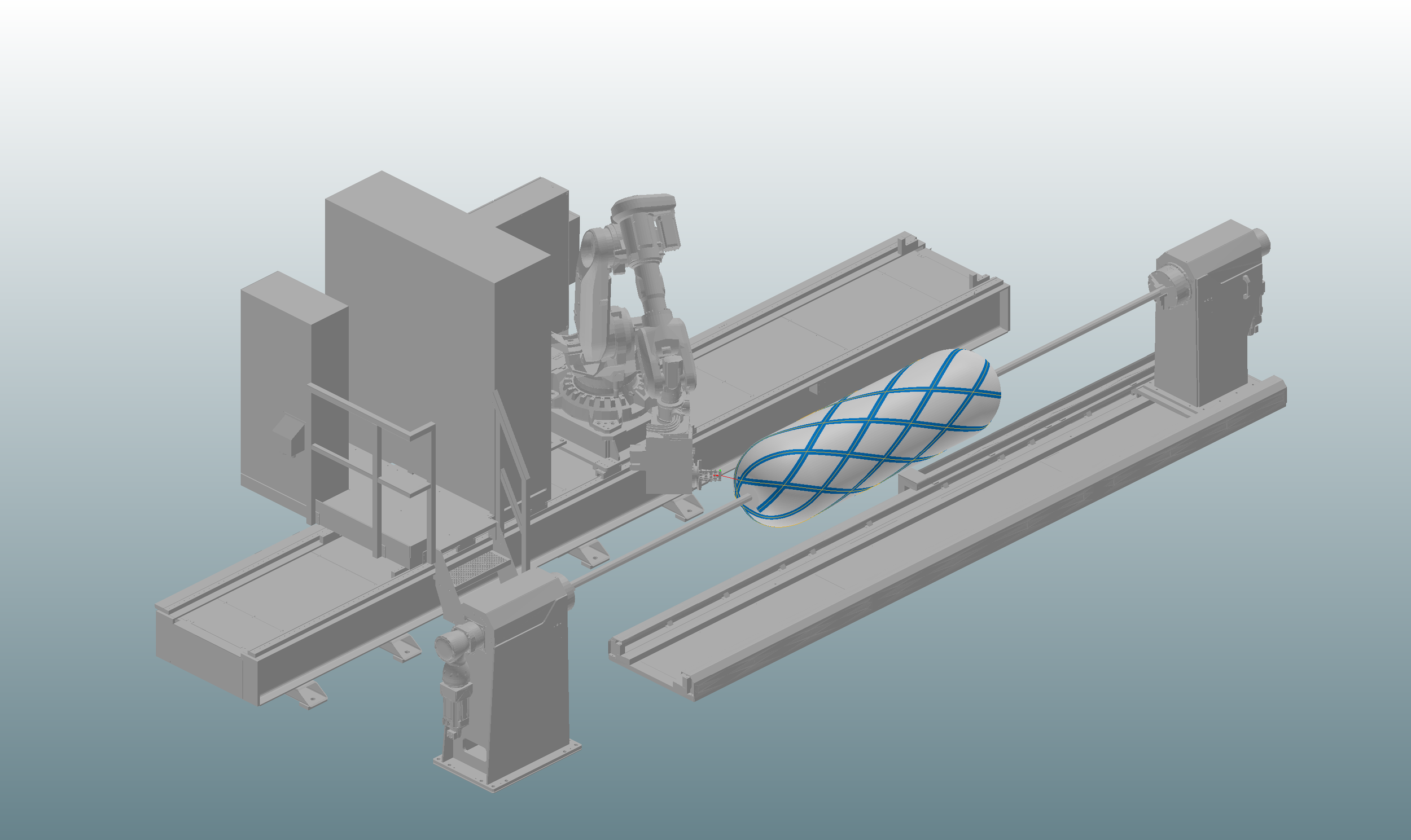
Production simulation with TaniqWind Pro – our powerful in-house developed filament winding software
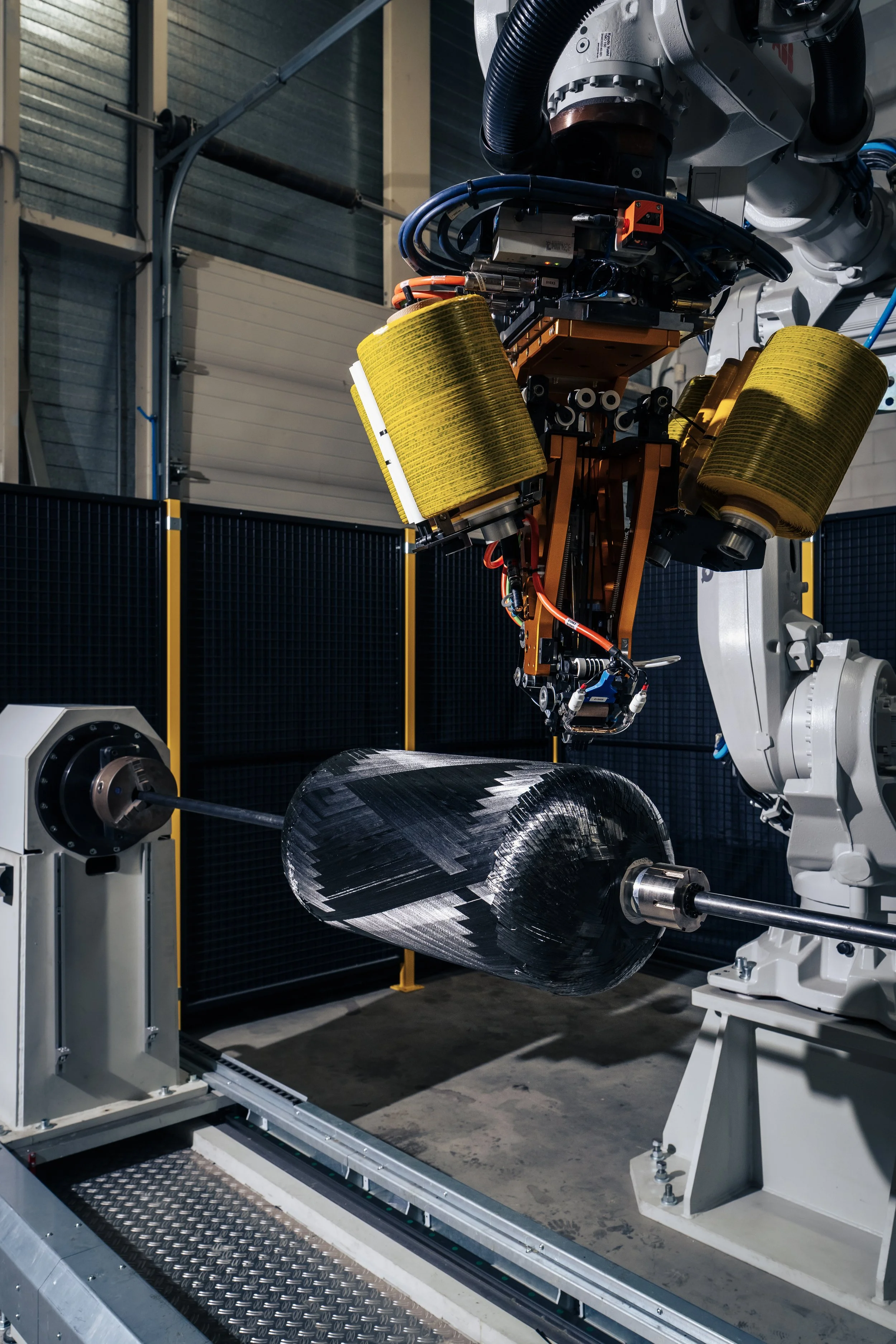
TANIQ’s Multi-Process Solution - combining filament winding, automated fiber placement, and rubber winding, all within a single software and robotic cell
Making An Impact
Our work in composites also brought us closer to the next generation of engineers and we wanted to support the people shaping the future of these industries. That led to the launch of our sponsorship program for international university rocket teams, giving students the opportunity to design and build their own rockets while gaining hands-on experience with composite manufacturing.
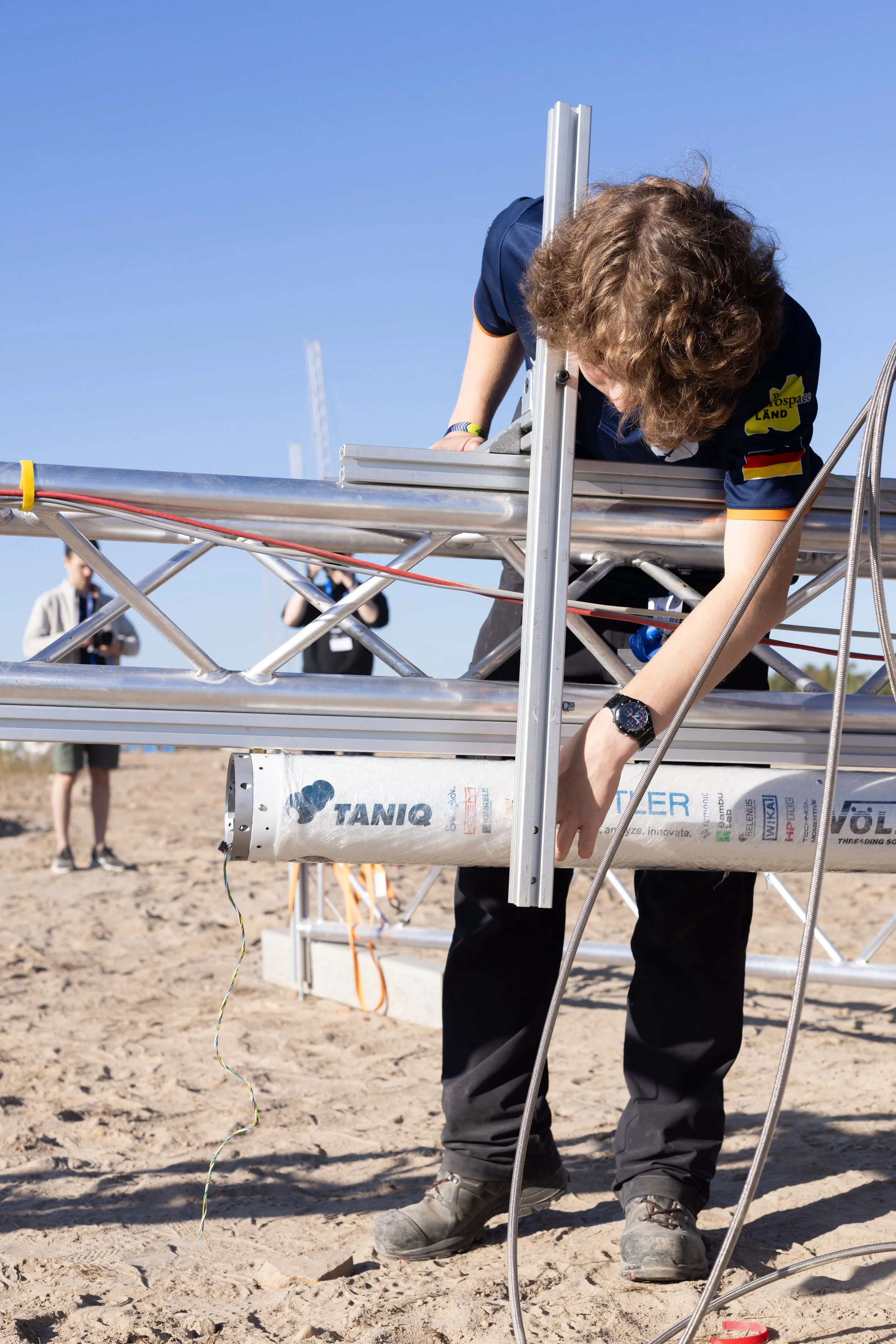
Giving the next generation of engineers the opportunity to design and build their own rockets with our solutions
And Here We Are — 20 years later
Twenty years of ideas, challenges, breakthroughs and lessons have shaped TANIQ into the company we are today. From our first steps in robotic winding to developing advanced software and automated solutions for both rubber and composites, every stage of the journey has brought a new challenge to overcome and a new possibility to explore.
But we would not be where we are today without the people we have worked with along the way. Our clients, their ideas, their challenges and their trust have constantly pushed us to think differently, try new things and keep improving. Many of the solutions we have developed grew from working together and finding new ways to solve problems. We’re grateful for all of it — the successes, the setbacks, the challenges, and the people along the way.
Looking back, it’s hard to imagine where that first idea would take us. Twenty years ago, our work took us 4,000 meters below sea level. Today, we are seeing our technology reach applications in space. And while 20 years have given us a lot to look back on, they’ve also given us plenty to look forward to. As we enter our third decade, we’re excited to see where the next 10 years will take us. The story isn’t ending. We’re just getting started.